
The Ford Mondeo is a large family car sold by the Ford Motor Company in various markets throughout the world. The name "Mondeo" derives from the Latin word mundus, meaning "world". The initial generation of the Mondeo was developed as a "world car", along with North American models marketed as the Ford Contour and Mercury Mystique until 2000. Current competitors include the Opel/Vauxhall Insignia, Citroën C5, Peugeot 407 and the Volkswagen Passat. The Mondeo was launched on 8 January 1993, and sales began on 22 March 1993. Available as a four-door saloon, a five-door hatchback, and a five-door estate, all models for the European market were produced at Ford's plant in the Belgian city of Genk. The Sierra had been built there since its launch in 1982, although until 1989, right hand drive Sierras had also been built in UK at the Dagenham plant. Intended as a world car, it replaced the Ford Sierra in Europe, the Ford Telstar in a large portion of Asia and other markets, while the Ford Contour and Mercury Mystique replaced the Ford Tempo and Mercury Topaz in North America. Unlike the Sierra, the Mondeo is front-wheel drive in its most common form, with a rarer four-wheel drive version available on the Mk1 car only. Instigated in 1986, the design of the car cost Ford US$6 billion. It was one of the most expensive new car programs ever. The Mondeo was significant as its design and marketing was shared between Ford USA in Dearborn, and Ford of Europe. Its codename while under development reflected thus: CDW27 signified that it straddled the C & D size classes and was a "World Car".

The car was launched in the midst of turbulent times at Ford of Europe, when the division was haemorrhaging hundreds of millions of dollars,[citation needed] and had gained a reputation in the motoring press for selling products which had been designed by accountants rather than engineers. The fourth generation Escort and Orion of 1990 was the zenith of this cost-cutting/high price philosophy which was by then beginning to backfire on Ford, with the cars being slated for their substandard ride and handling, though a facelift in 1992 had seen things improve a little. The Sierra had sold well, but not as well as the all-conquering Cortina before it, and in Britain, it had been overtaken in the sales charts by the newer Vauxhall Cavalier. Previously loyal customers were already turning to rival products and by the time of the Mondeo's launch, the future of Europe as a Ford manufacturing base was hanging in the balance. The new car had to be good, and it had to sell. Despite being billed as a world car, the only external items the Mondeo shared initially with the Contour were the windscreen, front windows, front mirrors and door handles. The rear end of the American sedan was basically the same as the European saloon, but with a red, dummy lense connecting the tail lights. The front end treatment, however, skipped a generation, from the European viewpoint, being the same as the Mk2 Mondeo right from the start. The Contour's oval grille was modified slightly on the Mercury variant. The interior also was slightly different. The CDW27 project turned out not to be a true world car in the sense that the original Ford Focus and the Mk.6 Ford Fiesta would later be, one design for the world.

A large proportion of the high development cost was due to the Mondeo being a completely new design, sharing very little, if anything, with the Ford Sierra and using an all-new, Volvo derived, platform. Over optimistically the floor pan was designed to accept virtually any conceivable drivetrain, from a transverse four to an in-line V-8. This resulted in a hugely obtrusive and mostly disused bellhousing cover and transmission tunnel. The resulting interior front of the car, especially the footwells, feel far more cramped than would be expected from a vehicle of this size. The Mondeo featured new manual and automatic transmissions and sophisticated suspension design, which Ford hoped would give it class-leading handling and ride qualities, and subframes front and rear to give it executive car refinement. The automatic transmission featured electronic control with sport and economy modes plus switchable overdrive. Safety was a high priority in the Mondeo design with a driver's side airbag (it was the first ever car sold from the beginning with a driver's airbag in all of its versions, which helped it achieve the ECOTY title in 1993), side-impact bars, seat belt pretensioners, and ABS (higher models) as standard features. Other features for its year included adaptive damping, self-levelling suspension (top station wagon models), traction control (V6 and 4WD versions), and heated front windscreen, branded Quickclear.

The interiors were usually well appointed, featuring velour trim, an arm rest with CD and tape storage, central locking (frequently remote), power windows (all round on higher models), power mirrors, flat-folding rear seats, etc. Higher specification models had leather seats, trip computers, electric sunroof, CD changer and alloy wheels. During its development, Ford used the 1986 Honda Accord and 1990 Nissan Primera as the class benchmarks that the CDW27 had to beat. Along with an all-new platform, the Mondeo also used Ford's then-new Zetec engines, first seen in 1991 in the Ford Escort and Ford Fiesta. Three versions of the 16-valve Zetec engine were used. The 1.6 L version (rated at 90 brake horsepower (67 kW)) from the Escort was used, a 1.8 (115 brake horsepower (86 kW)) also found in the Escort and Ford Fiesta (105 and 130 brake horsepower (78 and 97 kW)), while a new 136 brake horsepower (101 kW) 2.0 L version was launched. An alternative to the Zetec engines was the Endura-D 1.8 L turbodiesel. This engine had origins in the older 1.6 L diesel design used in the Fiesta and elsewhere. Although not without merits, it was not seen as a strong competitor to other European diesels such as that produced by Peugeot. The contrast between this unit and the competition seemed enormous by the time the engine was dropped in 2000. Strangely, the diesel powered vehicles could easily be distinguished by dint of their having a slightly redesigned grille.

A less popular engine (for the UK and Ireland) was introduced in 1994 in the form of the 170 brake horsepower (130 kW) 2.5 L 24-valve V6 Duratec unit, primarily included for markets where four-cylinder petrol engines are not favored and are usually intended for the upmarket European buyer. This engine, first unveiled in the Mondeo's North American cousin, the Ford Contour, is characterized by its smooth operation, chain-driven camshafts and an ability to operate using only half its 24 valves at low engine speeds. Fuel economy was reasonable, with the automatic barely much worse than the manual (but far less reliable). This engine was originally branded 24v (when valve count was all important), but later on sold as the more glamorous sounding V6. This engine was also used to introduce the new "ST" brand to the Mondeo range as a flagship model (with less specification than a Ghia or a Ghia X), the ST24 in 1997. The power of the engine stayed at 170 bhp (130 kW), the same as other 2.5 L-engined models (so was slower than a Mk1 24v), but the ST featured unique cabin trim (half leather seats), unique 16 in alloy wheels (that were originally only available on a Ghia X Estate), and a full Rally Sport Appearance Pack body kit as standard, The bodykit option was listed as a delete option for those that did not want it fitted as standard. This was later replaced by the Limited Edition ST200 in 2000, featuring a modified version of the V6 Duratec with a power output of 200 bhp (150 kW). Although neither of these models ever sold in high numbers, the marketing was important to Ford, as it was an introduction to the ST range as a sportier side to the full range, especially significant as apart from the Focus RS, both the XR and RS model ranges were phased out during the 1990s.

The Mk2 Mondeo, known in some quarters as the Mk1 Face-lift[citation needed], launched in October 1996 seeing three of the Mk1 Mondeo's biggest criticisms addressed: its bland styling, the bad performance of the headlights, the reflectors of which quickly yellowed and the cramped rear legroom. The lowering of specification levels around that time (e.g. air-conditioning and alloy wheels became optional on the UK Ghia models) may have indicated a desire by Ford to cut costs and recoup some of the huge sums invested in the original design. These specification levels were improved again in 1998 as the Mondeo approached replacement. The Mk2 saw almost every external panel replaced, becoming in every respect, other than the rear elevation, the same as the American Contour. This left only the doors, the roof, and the rear panels on the estate the same as the original Mk1 model. Even the extractor vents on the rear doors were replaced by a panel bearing the name Mondeo. The most notable change was the introduction of the Contour's corporate 'oval' grille and big, wraparound lighting units. The saloon version featured some distinctive rear lights. These incorporated an additional reflector panel that extended around the top and the side of the rear wings. Unlike the iterations seen on the heavily facelifted Scorpio and Mk4 Fiesta during the previous year, this facelift was well-received.

Ford briefly sold a version using the 2.0 L Zetec engine and four-wheel drive, available between 1995 and 1996 on cars with Si, Ghia and Ghia X trim. The timing was not ideal though, as four-wheel drive had already become synonymous with large SUVs such as the Land Rover Discovery, and the bottom dropped out of the four-wheel drive sedan market, with the notable exception of Subaru. People who would tolerate the knock on performance and economy, preferred to graduate to a full-blown SUV, rather than a sedan with good all-round traction, especially since SUVs had become fashionable at the time. In Europe, the Mondeo sold well, but in other markets such as the United States and Australia, it had not fared well, as there were larger locally-produced Ford models, such as the Taurus and Falcon that had stronger brand loyalty and offered better value for money. Ford claimed that it was a 'world car', but in a letter to Autocar magazine in the UK, a Ford dealer retorted 'What world was it designed for?' Because of this, the Contour and Mystique proved unpopular with American buyers. While the Contour sold at an average rate, the Mystique fizzled. The Mondeo Mk3 was much larger than the Mk1/2 version, but was not sold in the United States and Canada, where Ford now offers the Fusion.

There is however another theory advanced by some motoring journalists: because the Contour and Mystique were not created in the United States, they suffered from a lack of enthusiasm from inside Ford's North American operations. Those same theorists point to the fact that the BMW 3 Series — arguably a "world car", in the sense one version is sold globally, does quite well in the United States and it is the same size as the Contour and Mystique. The Mondeo was released in Australia in 1995, but was not a sales success, where, similarly, there was a much larger local model, the Falcon, and was dropped in 2001. Ford Australia withdrew completely from the medium-sized segment of the Australian market, arguing that it was in decline. The wagon version, the first medium-sized Ford of its kind to be sold in Australia since the Cortina, was dropped in 1999. It struggled against Japanese models such as the Honda Accord and Subaru Liberty, as well as the Holden Vectra, also imported from Europe, although unlike the Mondeo, briefly assembled locally. The Mondeo has since returned to Australia in 2007 with an all-new model. The Mondeo Mk2 was voted Car of the Year in 2001 by Autocar New Zealand and National Business Review. In addition, many earlier model Mondeos, imported used from Japan were also sold locally (Japan was also a good market for the Mondeo, a rare feat in a country with a high proportion of domestic automobiles).[citation needed] It was launched to replace the Telstar in New Zealand following the plant closure in 1997.
 Elegant Black 2011 Ford Edge
 Cool 2011 Ford Edge With Red Color
 2011 Ford Edge Steering Wheels
 2011 Ford Edge Interior
 2011 Ford Edge Sporty Wheels
 Luxury 2011 Ford Edge
 2011 Ford Edge Interior With Touch Screen
 2011 Ford Edge Engine
 The Ford Galaxy is a five-door large multi-purpose vehicle (MPV). It was first introduced in 1995, and is available in three generations. The first Galaxy was designed as a joint venture product between Ford and the Volkswagen Group. Produced at the joint-venture AutoEuropa plant in Palmela, Portugal, the vehicle was badge-engineered to create three vehicles: the Ford Galaxy; by Volkswagen Passenger Cars as the Volkswagen Sharan; and by SEAT as the Alhambra. The Galaxy used predominantly Volkswagen Group mechanicals, most notably the 2.8 litre VR6 petrol engine from the top versions of the Volkswagen Golf, as well as Volkswagen Group's 1.9 litre Turbocharged Direct Injection (TDI) turbodiesel unit. Initially only the 2.0 litre inline-four petrol version used a Ford powerplant - this derived from the Ford I4 DOHC engine. In later years this unit was supplemented by a 2.3 litre 16-valve version first seen in the facelifted Ford Scorpio. This engine was transversially mounted (as with the MKV Escort RS2000) as opposed to longitudinal mounting like in the Ford Scorpio.
 All of the VW Group-sourced engines were supplied with "Ford" badges on the rocker covers, despite being VW Group designs. All automatic transmissions were VW Group AG4 boxes, but manual gearboxes on all engines were VXT75 five-speed (modified versions of the trusted Ford MTX-75 five-speed set-up to suit the transverse engine layout). The original interior used a mix of both Ford and VW Group components, using a Golf-derived instrument pack, and most of the switchgear, while the curved fascia moulding was of Ford design, heavily reminiscent of that used in the Ford Mondeo. A major redesign in 2000 saw the Galaxy distance itself from its Volkswagen Group platform-mates. The car adopted the Ford corporate front end, while the interior benefited from an all-new dash, utilising high-quality materials and a design akin to the third-generation Ford Mondeo, introduced at a similar time as the new Galaxy.Also new engines were available across the range, the newer 24v VR6, along with VW Group's Pumpe-Düse (PD) TDI engines available in 90 bhp (67 kW; 91 PS) (only on LX models), 115 bhp (86 kW; 117 PS), 130 bhp (97 kW; 132 PS) and 150 bhp (112 kW; 152 PS) forms, these were matched to a six-speed manual transmission, a four-speed automatic transmission with manual sequential shift operation, and a five-speed automatic transmission (auto boxes were only available on 115 PS (85 kW; 113 hp) variant). This version is still available in Latin America, with 2.0, 2.3 and 2.8 petrol engines. However, the VW Group-sourced 1.9 TDI engine is no longer offered.
 The third generation Galaxy was introduced at the 2006 Geneva Motor Show, and went on sale alongside the shorter and lower Ford S-Max in June 2006. The new Galaxy is larger than its predecessor and is a four pillar vehicle of only Ford's own design, with no Volkswagen Group content (this is because Ford sold its stake in AutoEuropa back to the Volkswagen Group the year before). No longer produced at the AutoEuropa plant in Portugal, Europe's replacement Galaxy is assembled at a newly re-equipped plant alongside the Mondeo in Genk, Belgium. With the S-MAX catering to customers who require a sport-oriented multi-purpose vehicle (MPV), Ford were able to expand the Galaxy in every dimension without losing sales in size-conscious Europe. Due to its size, Ford was unable to design the Galaxy using a full Kinetic Design format. However, Ford officially states that the car contains 'elements' of Kinetic Design, such as its trapezoidal grille, large wheelarches and angular headlights. No spare wheel is obtained when buying this car; an aerosol sealant-foam is given to seal punctures until a new tyre can be purchased.

 In the year 1995, Ford Motor Company introduced the Ford Galaxy, a large multi purpose vehicle. In the year 2006, Ford introduced the second generation Ford Galaxy, which was sold beside the shorter large MPV known as the S MAX. In Argentina, the Ford Galaxy was sold as a rebadged version of the Volkswagen Santana, which resembled Brazil’s Ford Versailles vehicle. The very first Ford Galaxy was built and designed as a joint venture between Volkswagen and Ford. The Galaxy was then sold as the Sharan by Volkswagen. SEAT sold the vehicle as the Alhambra. All three models of this vehicle were built in Portugal at Autoeuropa, which is situated in the town of Palmela. In the year 2006, the second generation of Ford Galaxy was unveiled at the Geneva Motor Show. The vehicle was sold alongside the S MAX beginning in June of that year. The second generation Ford Galaxy is a lot bigger than the car it succeeds. It boasts an entirely new all Ford design, free of Volkswagen content. The Ford Galaxy is no longer produced in Portugal; it is made at a newly equipped factory in Belgium. The new Ford Galaxy is viewed as being a lot more mainstream than the sporty S MAX vehicle.
 Only Ford's own engines are used, all diesels being from the Duratorq family of engines in 100 PS (74 kW; 99 bhp) and 125 PS (92 kW; 123 bhp) 1.8 litre format, and also 130 PS (96 kW; 128 bhp) and 140 PS (103 kW; 138 bhp) 2.0 TDCi versions, with 2.2 TDCi for more power. Three petrol engines are offered - the Duratec 2.0 145 PS (107 kW; 143 bhp) variant and 2.3 litre petrol 161 bhp (120 kW; 163 PS) engine, and now a new 2.0 EcoBoost for better acceleration, and higher speed, reaching 135 mph (217 km/h) and accelerating from 0-60 mph in 8.5 seconds with the 203 hp (151 kW) engine. In the United Kingdom, the car is available in Edge, Zetec and Ghia trim levels. In February 2008, Ford announced that the Galaxy would be made available with the Titanium high series trim as seen on the Focus, C-MAX, Kuga, Mondeo and S-MAX ranges. The Titanium model is specified to the same level as the Ghia but adds a so-called 'techno' feel. At the same time the availability of a 2.3 TDCi engine option (joint design with Peugeot; 170 hp) was announced.
 Ford Galaxy Top Side Track
 The Ford Mondeo is a large family car sold by the Ford Motor Company in various markets throughout the world. The name "Mondeo" derives from the Latin word mundus, meaning "world". The initial generation of the Mondeo was developed as a "world car", along with North American models marketed as the Ford Contour and Mercury Mystique until 2000. Current competitors include the Opel/Vauxhall Insignia, Citroën C5, Peugeot 407 and the Volkswagen Passat. The Mondeo was launched on 8 January 1993, and sales began on 22 March 1993. Available as a four-door saloon, a five-door hatchback, and a five-door estate, all models for the European market were produced at Ford's plant in the Belgian city of Genk. The Sierra had been built there since its launch in 1982, although until 1989, right hand drive Sierras had also been built in UK at the Dagenham plant. Intended as a world car, it replaced the Ford Sierra in Europe, the Ford Telstar in a large portion of Asia and other markets, while the Ford Contour and Mercury Mystique replaced the Ford Tempo and Mercury Topaz in North America. Unlike the Sierra, the Mondeo is front-wheel drive in its most common form, with a rarer four-wheel drive version available on the Mk1 car only. Instigated in 1986, the design of the car cost Ford US$6 billion. It was one of the most expensive new car programs ever. The Mondeo was significant as its design and marketing was shared between Ford USA in Dearborn, and Ford of Europe. Its codename while under development reflected thus: CDW27 signified that it straddled the C & D size classes and was a "World Car".
 The car was launched in the midst of turbulent times at Ford of Europe, when the division was haemorrhaging hundreds of millions of dollars,[citation needed] and had gained a reputation in the motoring press for selling products which had been designed by accountants rather than engineers. The fourth generation Escort and Orion of 1990 was the zenith of this cost-cutting/high price philosophy which was by then beginning to backfire on Ford, with the cars being slated for their substandard ride and handling, though a facelift in 1992 had seen things improve a little. The Sierra had sold well, but not as well as the all-conquering Cortina before it, and in Britain, it had been overtaken in the sales charts by the newer Vauxhall Cavalier. Previously loyal customers were already turning to rival products and by the time of the Mondeo's launch, the future of Europe as a Ford manufacturing base was hanging in the balance. The new car had to be good, and it had to sell. Despite being billed as a world car, the only external items the Mondeo shared initially with the Contour were the windscreen, front windows, front mirrors and door handles. The rear end of the American sedan was basically the same as the European saloon, but with a red, dummy lense connecting the tail lights. The front end treatment, however, skipped a generation, from the European viewpoint, being the same as the Mk2 Mondeo right from the start. The Contour's oval grille was modified slightly on the Mercury variant. The interior also was slightly different. The CDW27 project turned out not to be a true world car in the sense that the original Ford Focus and the Mk.6 Ford Fiesta would later be, one design for the world.
 A large proportion of the high development cost was due to the Mondeo being a completely new design, sharing very little, if anything, with the Ford Sierra and using an all-new, Volvo derived, platform. Over optimistically the floor pan was designed to accept virtually any conceivable drivetrain, from a transverse four to an in-line V-8. This resulted in a hugely obtrusive and mostly disused bellhousing cover and transmission tunnel. The resulting interior front of the car, especially the footwells, feel far more cramped than would be expected from a vehicle of this size. The Mondeo featured new manual and automatic transmissions and sophisticated suspension design, which Ford hoped would give it class-leading handling and ride qualities, and subframes front and rear to give it executive car refinement. The automatic transmission featured electronic control with sport and economy modes plus switchable overdrive. Safety was a high priority in the Mondeo design with a driver's side airbag (it was the first ever car sold from the beginning with a driver's airbag in all of its versions, which helped it achieve the ECOTY title in 1993), side-impact bars, seat belt pretensioners, and ABS (higher models) as standard features. Other features for its year included adaptive damping, self-levelling suspension (top station wagon models), traction control (V6 and 4WD versions), and heated front windscreen, branded Quickclear.
 The interiors were usually well appointed, featuring velour trim, an arm rest with CD and tape storage, central locking (frequently remote), power windows (all round on higher models), power mirrors, flat-folding rear seats, etc. Higher specification models had leather seats, trip computers, electric sunroof, CD changer and alloy wheels. During its development, Ford used the 1986 Honda Accord and 1990 Nissan Primera as the class benchmarks that the CDW27 had to beat. Along with an all-new platform, the Mondeo also used Ford's then-new Zetec engines, first seen in 1991 in the Ford Escort and Ford Fiesta. Three versions of the 16-valve Zetec engine were used. The 1.6 L version (rated at 90 brake horsepower (67 kW)) from the Escort was used, a 1.8 (115 brake horsepower (86 kW)) also found in the Escort and Ford Fiesta (105 and 130 brake horsepower (78 and 97 kW)), while a new 136 brake horsepower (101 kW) 2.0 L version was launched. An alternative to the Zetec engines was the Endura-D 1.8 L turbodiesel. This engine had origins in the older 1.6 L diesel design used in the Fiesta and elsewhere. Although not without merits, it was not seen as a strong competitor to other European diesels such as that produced by Peugeot. The contrast between this unit and the competition seemed enormous by the time the engine was dropped in 2000. Strangely, the diesel powered vehicles could easily be distinguished by dint of their having a slightly redesigned grille.
 A less popular engine (for the UK and Ireland) was introduced in 1994 in the form of the 170 brake horsepower (130 kW) 2.5 L 24-valve V6 Duratec unit, primarily included for markets where four-cylinder petrol engines are not favored and are usually intended for the upmarket European buyer. This engine, first unveiled in the Mondeo's North American cousin, the Ford Contour, is characterized by its smooth operation, chain-driven camshafts and an ability to operate using only half its 24 valves at low engine speeds. Fuel economy was reasonable, with the automatic barely much worse than the manual (but far less reliable). This engine was originally branded 24v (when valve count was all important), but later on sold as the more glamorous sounding V6. This engine was also used to introduce the new "ST" brand to the Mondeo range as a flagship model (with less specification than a Ghia or a Ghia X), the ST24 in 1997. The power of the engine stayed at 170 bhp (130 kW), the same as other 2.5 L-engined models (so was slower than a Mk1 24v), but the ST featured unique cabin trim (half leather seats), unique 16 in alloy wheels (that were originally only available on a Ghia X Estate), and a full Rally Sport Appearance Pack body kit as standard, The bodykit option was listed as a delete option for those that did not want it fitted as standard. This was later replaced by the Limited Edition ST200 in 2000, featuring a modified version of the V6 Duratec with a power output of 200 bhp (150 kW). Although neither of these models ever sold in high numbers, the marketing was important to Ford, as it was an introduction to the ST range as a sportier side to the full range, especially significant as apart from the Focus RS, both the XR and RS model ranges were phased out during the 1990s.
 The Mk2 Mondeo, known in some quarters as the Mk1 Face-lift[citation needed], launched in October 1996 seeing three of the Mk1 Mondeo's biggest criticisms addressed: its bland styling, the bad performance of the headlights, the reflectors of which quickly yellowed and the cramped rear legroom. The lowering of specification levels around that time (e.g. air-conditioning and alloy wheels became optional on the UK Ghia models) may have indicated a desire by Ford to cut costs and recoup some of the huge sums invested in the original design. These specification levels were improved again in 1998 as the Mondeo approached replacement. The Mk2 saw almost every external panel replaced, becoming in every respect, other than the rear elevation, the same as the American Contour. This left only the doors, the roof, and the rear panels on the estate the same as the original Mk1 model. Even the extractor vents on the rear doors were replaced by a panel bearing the name Mondeo. The most notable change was the introduction of the Contour's corporate 'oval' grille and big, wraparound lighting units. The saloon version featured some distinctive rear lights. These incorporated an additional reflector panel that extended around the top and the side of the rear wings. Unlike the iterations seen on the heavily facelifted Scorpio and Mk4 Fiesta during the previous year, this facelift was well-received.
 Ford briefly sold a version using the 2.0 L Zetec engine and four-wheel drive, available between 1995 and 1996 on cars with Si, Ghia and Ghia X trim. The timing was not ideal though, as four-wheel drive had already become synonymous with large SUVs such as the Land Rover Discovery, and the bottom dropped out of the four-wheel drive sedan market, with the notable exception of Subaru. People who would tolerate the knock on performance and economy, preferred to graduate to a full-blown SUV, rather than a sedan with good all-round traction, especially since SUVs had become fashionable at the time. In Europe, the Mondeo sold well, but in other markets such as the United States and Australia, it had not fared well, as there were larger locally-produced Ford models, such as the Taurus and Falcon that had stronger brand loyalty and offered better value for money. Ford claimed that it was a 'world car', but in a letter to Autocar magazine in the UK, a Ford dealer retorted 'What world was it designed for?' Because of this, the Contour and Mystique proved unpopular with American buyers. While the Contour sold at an average rate, the Mystique fizzled. The Mondeo Mk3 was much larger than the Mk1/2 version, but was not sold in the United States and Canada, where Ford now offers the Fusion.
 There is however another theory advanced by some motoring journalists: because the Contour and Mystique were not created in the United States, they suffered from a lack of enthusiasm from inside Ford's North American operations. Those same theorists point to the fact that the BMW 3 Series — arguably a "world car", in the sense one version is sold globally, does quite well in the United States and it is the same size as the Contour and Mystique. The Mondeo was released in Australia in 1995, but was not a sales success, where, similarly, there was a much larger local model, the Falcon, and was dropped in 2001. Ford Australia withdrew completely from the medium-sized segment of the Australian market, arguing that it was in decline. The wagon version, the first medium-sized Ford of its kind to be sold in Australia since the Cortina, was dropped in 1999. It struggled against Japanese models such as the Honda Accord and Subaru Liberty, as well as the Holden Vectra, also imported from Europe, although unlike the Mondeo, briefly assembled locally. The Mondeo has since returned to Australia in 2007 with an all-new model. The Mondeo Mk2 was voted Car of the Year in 2001 by Autocar New Zealand and National Business Review. In addition, many earlier model Mondeos, imported used from Japan were also sold locally (Japan was also a good market for the Mondeo, a rare feat in a country with a high proportion of domestic automobiles).[citation needed] It was launched to replace the Telstar in New Zealand following the plant closure in 1997.
 Ford Fiesta Concept
 Ford Fiesta New Design
 Fast Ford Fiesta
 Elegant Ford Fiesta
 Cool Ford Fiesta
 Ford Fiesta Hatchback
 Orange Ford Fiesta
 Sporty Ford Fiesta
 Ford Fiesta Steering Wheels

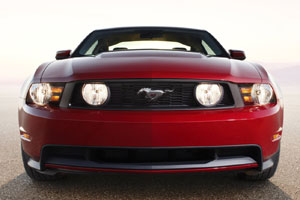
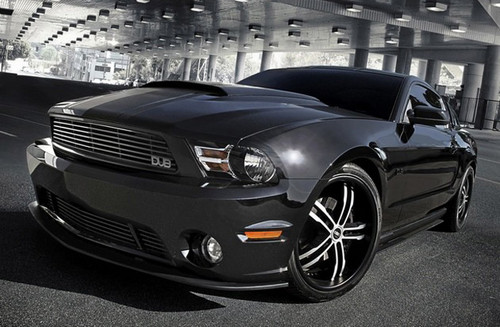


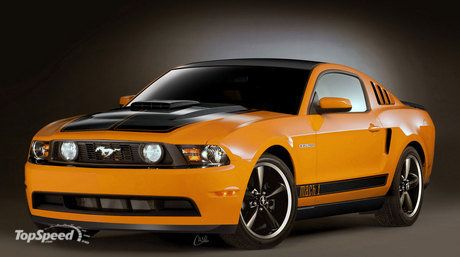


 Cool Ford Mustang GT
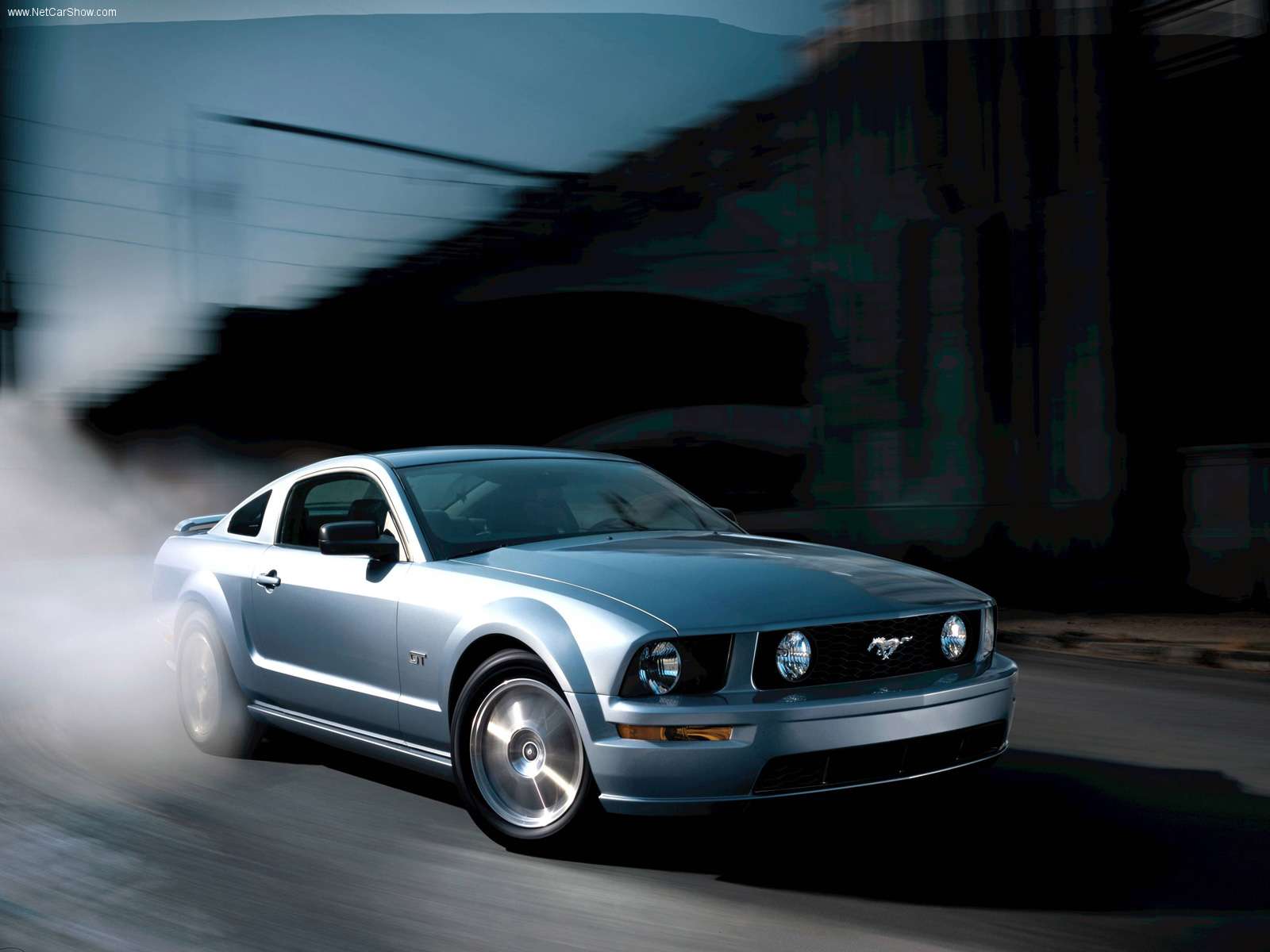 Impressive Ford Mustang GT
 Black Ford Mustang GT


