Showing posts with label Porsche. Show all posts

Thursday, March 10, 2011

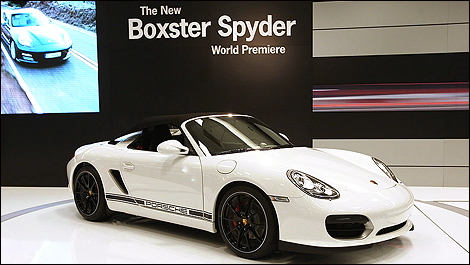
Porsche Boxster Spyder

On November 5, 2009, Porsche officially announced the creation of a new production Boxster which was officially unveiled at the 2009 Los Angeles Motor Show. To be positioned above the Boxster S, the Boxster Spyder will be the lightest Porsche on the market, weighing 2,811 pounds (1,275 kg), a full 176 pounds (80 kg) lighter than a Boxster S. This has been achieved through the elimination of the conventional soft top's operating mechanism, the radio/PCM unit, air conditioning, storage compartments, door handles, cupholders and large LED light modules on the front fascia, although some of these can be re-added to the car in the form of options.

Sporty Porsche Boxster Spyder

Porsche Boxster Spyder On The Road

Porsche Boxster Spyder Interior View


2011 Porsche Boxster Spyder Road Test Video

Porsche Boxster Spyder In Two Side

Luxury Porsche Boxster Spyder

Red Porsche Boxster Spyder

Porsche Boxster Spyder Engine

Porsche Boxster Spyder Mega Wall

The Porsche Boxster Spyder will ride on a firmer suspension than the other Boxster models, and will also be almost one inch lower in order to have firmer handling. A manually-operated canvas top, sports bucket seats and two signature humps running along the back of the vehicle provide characteristic design elements. It will offer a six-cylinder boxer engine with 320 horsepower (239 kW; 324 PS) and 273 lb·ft (370 N·m) of torque (a 10 hp (7.5 kW) increase over the engine in the Boxster S and the same engine used in the related Cayman S), with manual transmission as standard and Porsche's PDK dual-clutch gearbox as an option. The vehicle will be released worldwide in February 2011 as a 2011 model with a base price of US$61,200.

Friday, February 18, 2011

Porsche 918 Spyder


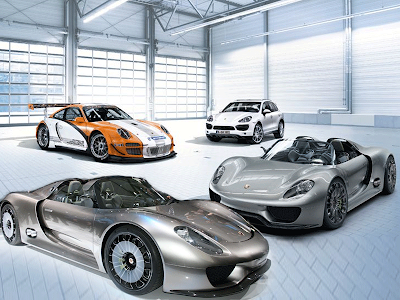
All new Porsche 918 Spyder Hybrid Concept

Sporty Porsche 918 Spyder

Elegant Porsche 918 Spyder

Porsche 918 Spyder Steering Wheels

Porsche 918 Spyder Beautiful Lighting

Porsche 918 Spyder Show Up

Porsche 918 Spyder Exhaust

Tuesday, January 25, 2011

Porsche 911 Targa 4, 2009

Porsche 911 Targa 4, 2009


The 911 Targas differ from both the Carrera Coupes and Cabriolets by dint of their stunning glass tops. The all-wheel drive Porsche 911 Targa 4 and Targa 4S are unique with roofs comprised entirely of two transparent panels. The glass extends from the windshield header back to the leading edge of the engine cover, from side frame to side frame.

More Power from Less Fuel
Both the Porsche 911 Targa 4 and 911 Targa 4S receive new engines which boast direct fuel injection, new two-piece crankcases and revised intake and exhaust systems along with Porsche VarioCam Plus intake-valve timing and lift system. By injecting the fuel directly into each cylinder's combustion chamber rather than the intake as is more common, combustion is cleaner and more complete. This technology reduces exhaust emissions and fuel consumption while simultaneously increasing engine potency.

The results are felt and appreciated immediately by the Porsche 911 Targa 4's driver. Thanks to a 6.2 percent increase in horsepower and a 5.3 percent gain torque over last year's model, the 3.6- liter engine goes from 325 to 345 hp and receives a gain in torque from 273 to 288 lb.-ft. A manual gearbox equipped 2009 911 Targa 4 can accelerate from 0 to 60 mph (96 km/h) in 5.0 seconds.

Two Clutches, No Clutch Pedal
To take full advantage of the newly designed engines, Porsche is offering drivers a transmission that delivers quicker acceleration than is possible with the standard manual gearbox while maximizing fuel efficiency. The new PDK (from the German Porsche- Doppelkupplungsgetriebe), or Porsche double-clutch, replaces the Tiptronic S as the optional gearbox in both the Porsche 911 Targa 4 and Targa 4S.

Porsche was the first automaker to successfully use this transmission technology back in the 1980s when the transmission was developed for the mighty Porsche 962 Group C race car. The Porsche 911 Targa 4 or Targa 4S driver can allow the seven-speed PDK to shift up and down automatically, or he may opt to manually shift via steering-wheel mounted paddles or the console-mounted lever, the same as with the Tiptronic S.

All-Weather Maximum Performance
In addition to their unique two-section glass roofs, the Porsche 911 Targa 4 and Targa 4S offer their drivers the added benefits of all-wheel drive. For 2009, these cars benefit from the same electronically controlled Porsche Traction Management (PTM) found under the awesome Porsche Turbo, as well as the new mchanical locking differential standard.

PTM replaces the previous models' viscous-coupling, mechanical all-wheel drive system and operates more quickly and seamlessly than its predecessor. PTM varies the torque split infinitesmely and absolutely between front and rear wheels as needed for optimum traction. However, since most purists feel-and Porsche's engineers staunchly believe-that rear-drive is critical for optimum sporty driving, PTM directs two thirds of the engine's torque to the rear wheels under normal driving conditions.

When the system determines it's needed, PTM diverts engine power and torque to the front axle in millisecond cycles. Particularly at very high speeds, all the driver feels is the car's significant stability.

Bigger, Grippier Brakes
Porsche engineers firmly believe that a car's deceleration ability must always out-perform its ability to accelerate. Commensurate with the gains in engine performance, the 2009 Porsche 911 Targa 4 and Targa 4S receive added braking capability. All four brake rotors on both cars are cross-drilled, inner vented and now 12.99 inches (330 mm) in diameter.

In addition, the monobloc, four-piston calipers are now the same as those used on the 911 Turbo. Critical refinements have been made to the airflow around the wheels to increase brake cooling all around as well.

Instantly Recognizable and Aerodynamic
With their full-glass canopy - from beltline to beltline, front cowl to rear engine cover - the Porsche 911 Targa 4 and Targa 4S look like nothing else on the road, Porsche or otherwise. But from the beltline down, the cars share a strong resemblance to the current Carrera 4 and Carrera 4S models.

Clearly, the most striking element of the 911 Targa is its 16.58 sq.-ft. glass roof. The roof is comprised of two separate segments: a sliding panel over the front seats and a hinged tailgate at the rear. The electrically operated front panel fully opens or closes in seven seconds. When open, the glass panel slides snugly beneath the tailgate, providing almost five square feet of open space above the passenger cabin.

The sliding roof comes standard with a new sun shade offering greater privacy and more effective thermal protection than before. When closed, the sun shade covers the entire area of the sliding roof panel, opening and closing electrically and independently of the roof itself.
The glass roof and tailgate are made of special tinted glass, which protects the occupants from ultraviolet radiation and excessive heat even in bright sunlight.

The rear section of the Targa top opens for access to the interior, particularly handy for getting to the storage area behind the rear seatbacks. The Porsche 911 Targa 4 and Targa 4S are the only models in the Porsche 911 range with a separately opening tailgate.

More Sophisticated and Comfortable
Beneath the glass top, the Porsche 911 Targa 4 and Targa 4S boast luxuriously appointed passenger cabins. Like all Porsches, the cars offer their occupants the protection of six airbags: dual frontal-impact airbags as well as two seat-mounted thorax-protecting side-impact airbags and two head-protecting side-impact curtain door-mounted airbags.

Interior refinements include a revamped center console highlighted by a new Porsche Communication Management system-PCM 3.0-and the availability of ventilated front seats.
The optional navigation module now has a 40 GB hard drive. Other available features with the newest PCM include XM satellite radio with XM NavTraffic capability, Bluetooth connectivity, an iPod port, a USB port and an auxiliary jack.

Interior comfort may be further enhanced thanks to optional seat ventilating fans, available in conjunction with heated seats. These circulate air through the seatback and cushion upholstery to expedite cooling, heating and/or drying the driver and passenger.
Porsche Boxster, 2009

Porsche Boxster, 2009


In 1948, the 356 was the first sports car to bear the Porsche name, and in July that year the lightweight mid-engined roadster achieved its first motorsport victory. In 1953, the Porsche 550 Spyder was launched. This agile, lightweight race car was powered by a high performance 'boxer' engine which took it to countless international victories.

Porsche presented the second generation of the mid-engined Porsche Boxster roadster at the 2008 Los Angeles Motor Show. The highlight of the new generation is the new flat-six 'boxer' engines, developed with new technical features from the ground up, providing not only more power, but also significantly greater fuel efficiency.

A further improvement of both fuel economy and performance is guaranteed by the Porsche Doppelkupplungsgetriebe (PDK), the new double-clutch gearbox now available as an option on both the Porsche Boxster and Boxster S.

Displacing 2.9-litres, the engine of the Porsche Boxster develops 255 bhp (188 kW) in the Boxster, an increase of 10 horsepower over the prior 2.7-litre model.

The 3.4-litre power unit in the Porsche Boxster S now features Direct Fuel Injection, and delivers 310 bhp (228 kW), up by 15 bhp.

Direct Fuel Injection standard on 3.4-litre S engine
The driver benefits from a further advantage of direct injection every time they touch the throttle pedal: with fuel being injected fractions of a second prior to combustion, the engines respond more directly and spontaneously to even the slightest movement of the driver's right foot. This is not only the case when accelerating, but also when lifting off the throttle, for engine speed drops more quickly and smoothly since there is no residual fuel left in the intake manifold which might otherwise prolong the combustion process.

Design emphasises performance
The seamless blend of function and design has always been the Porsche philosophy. The result is a design consistency which is recognisable from every angle. A design which is both powerful and refined, and whose lines emphasise its sports performance.

The evolutionary styling of the next generation Porsche Boxster embodies these principles. The latest models are clearly distinguishable from outside through their newly-designed nose and tail. The new halogen headlights with their integrated direction indicators are reminiscent of the lights on the Carrera GT, while at the rear, new LED lights taper to the outside and are integrated elegantly in to the restyled bodywork.

PDK: shifting gears more quickly, reducing fuel consumption
The new Porsche Boxster models are available with the Porsche-Doppelkupplungsgetriebe (PDK) carried over directly from motor sport, and replacing the former Tiptronic S torque converter automatic transmission. When equipped with PDK, the Porsche Boxster accelerates from 0-62mph (100 km/h) 0.1 seconds faster than with the manual six-speed gearbox.

Acceleration is particularly fast and dynamic with the optional Sports Chrono Package Plus featuring Launch Control; this offers maximum acceleration from a standing start and also a Race Track Gearshift Strategy for the fastest conceivable gear change as an exclusive highlight on the PDK models.

Porsche Doppelkupplungsgetriebe (PDK) - in detail
The next generation Porsche Boxster and Boxster S are available for the first time with the new Porsche Doppelkupplungsgetriebe (PDK), literally Porsche double-clutch gearbox. Offering no less than seven forward gears, the new gearbox combines the driving comfort of a torque converter-equipped automatic transmission with the dynamic manual gearshift functionality of a sequential racing gearbox. PDK also boasts an entirely automatic gearshift function, and replaces the Porsche Tiptronic S automatic transmission previously offered. Through its optimised and adaptive gearshift programmes, PDK further improves the acceleration of the Porsche Boxster models and reduces fuel consumption to an even lower level.

In principle, the PDK consists of a conventional manual gearbox and a hydraulic control system divided into two separate transmission units. Two wet clutches in radial arrangement, controlled hydraulically, and using oil for both cooling and lubrication, form the heart of the transmission. One clutch is for the first transmission unit with the uneven gear ratios (1,3,5,7) and reverse, and the other clutch is for the second transmission unit with the even gears (2,4,6). Via a number of pressure valves, the hydraulic control unit masterminds both the wet clutches and the shift cylinders activating the transmission ratio required.

The gearshift perceived by the driver comes not from the gears actually changing, but from the change of positive clutch engagement. In this case, the clutch on one transmission opens or disengages while the clutch on the other transmission closes or engages in a simultaneous process. The big advantage is an even faster gearshift than with a conventional manual gearbox or torque converter automatic transmission. The gears are already 'in mesh' when shifting and the power of the engine need not be interrupted in the process.

Thursday, January 20, 2011

Porsche 911 GT2


Elegant Black Porsche 911 GT2


Porsche 911 GT2 Review


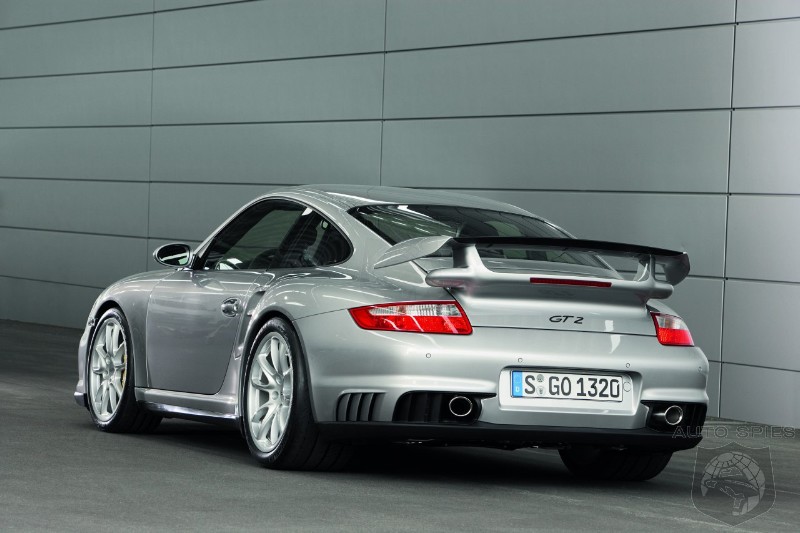
Silver Porsche 911 GT2 On the Road


Porsche 911 GT2 Hatchback


Sporty Porsche 911 GT2


Porsche 911 GT2 Concept


Impressive Porsche 911 GT2 Exhaust


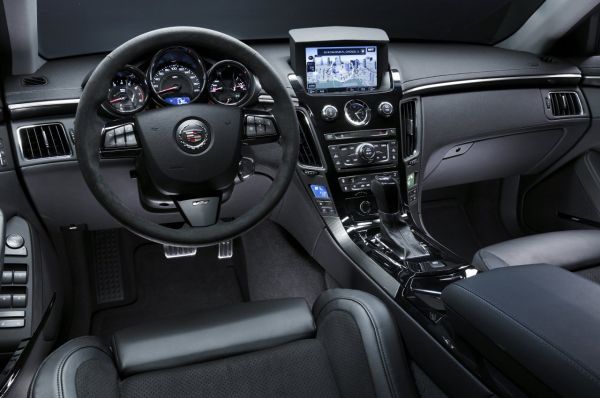
Elegant Porsche 911 GT2 Interior


Porsche 911 GT2 Test Drive

Thursday, December 16, 2010

2010 Porsche Panamera

Like most things Porsche, the 2010 Porsche Panamera 4S isn't easy to classify. At first, we were tempted to call it a squashed Cayenne, but the driving characteristics took that comparison out of the running. And although we were reminded of the 911 4S while behind the wheel, we just couldn't bring ourselves to call it a stretched 911. The first spy shots of the Panamera produced quite a bit of negative reaction towards its styling and, though that was mostly undeserved, the long cabin does give it an odd proportion.


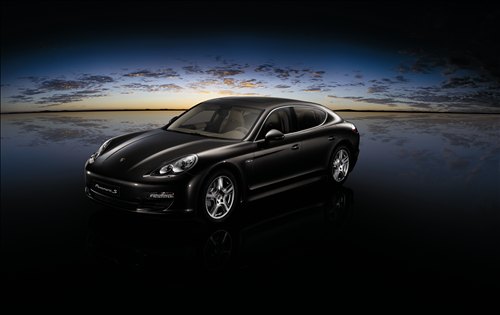
New 2010 Porsche Panamera in dark


Elegant 2010 Porsche Panamera


Exotic 2010 Porsche Panamera with the top speed


Red 2010 Porsche Panamera on the road


Glory blue 2010 Porsche Panamera


Luxury 2010 Porsche Panamera


2010 Porsche Panamera from beside


Luxury interior of 2010 Porsche Panamera


View detail of 2010 Porsche Panamera inside


2010 Porsche Panamera with GPS and advance accessories

Wednesday, December 8, 2010

2011 Porsche Carrera GT


Various type of cars


Black 2011 Porsche Carrera GT


Silver 2011 Porsche Carrera GT looks elegant cars


Green 2011 Porsche Carrera GT from beside

Sporty 2011 Porsche Carrera GT


Luxury 2011 Porsche Carrera GT


Black 2011 Porsche Carrera GT


2011 Porsche Carrera GT front view

2011 Porsche Carrera GT with top speed
Related Posts Plugin for WordPress, Blogger...