Showing posts with label Renault. Show all posts

Wednesday, February 16, 2011

Renault Scenic


Elegant Renault Scenic


Active Renault Scenic


Renault Scenic View Detail Concept


Renault Scenic Hatchback


Renault Scenic Interior


Renault Scenic Back Lighting

Monday, January 17, 2011

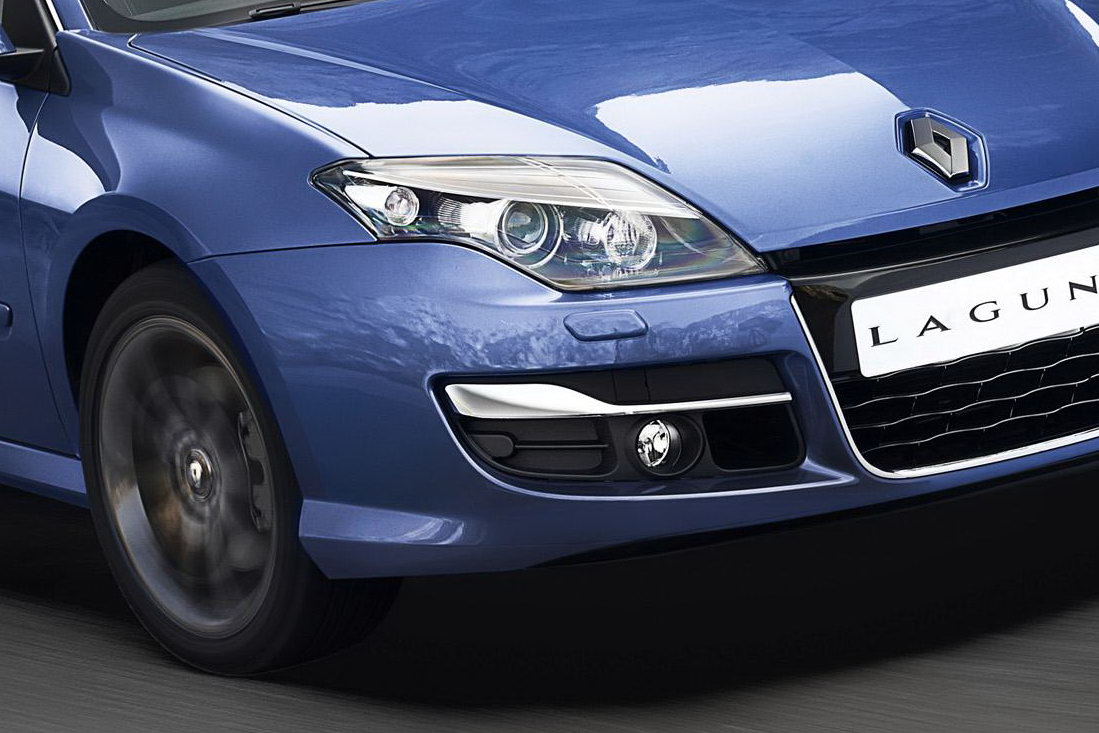
2011 Renault Laguna

The Renault Laguna is a large family car produced by the French manufacturer Renault. The first Laguna was launched in 1993, the second generation was launched in 2000, and the third generation was made available for sale in October 2007. The regular production Renault passenger models are unrelated to the concept car of the same name, the Laguna, a two-seat roadster shown by the automaker during the European 1990 auto show circuit. The name was also previously used from 1973 to 1976 by Chevrolet for a top-of-the-line Chevelle model, the Chevrolet Chevelle Laguna.

New 2011 Renault Laguna

Sporty 2011 Renault Laguna

2011 Renault Laguna Coupe Concept

2011 Renault Laguna Inside

2011 Renault Laguna Coupling

2011 Renault Laguna Strong Tires

2011 Renault Laguna Beautiful Lighting


2011 Renault Laguna Hatchback

Tuesday, January 4, 2011

Renault Clio

The Renault Clio is a supermini car produced by the French automobile manufacturer Renault. Originally launched in 1990, it is currently in its third generation. The Clio has seen substantial critical and commercial success, being consistently one of Europe's top-selling cars since its launch, and it is largely credited with restoring Renault's reputation and stature after a difficult second half of the 1980s. Symbol of its success and its longevity, the Clio is the only car to have been elected European Car of the Year twice, in 1991 and in 2006. The Clio has been sold as the Renault Lutecia in Japan, as Honda owns the right to the name Clio (being one of Honda's sales networks in Japan). A four-door saloon was developed for certain markets where sedans are traditionally preferred over hatchbacks and is sold under names Renault Clio Classic, Renault Clio Symbol, Renault Symbol, Renault Clio Sedan, Renault Clio Tricorps, and Renault Thalia. It is also sold under the Nissan nameplate in some Latin American markets as the Nissan Platina with slight changes in the front of the car to make it resemble the Nissan Altima.

The Clio was introduced at the Paris Motor Show in June 1990 and sales in France and the rest of the continent began then, although sales in Britain did not begin until March 1991. The Clio largely replaced the Renault 5 (which continued to be built in lower volumes until 1996 in Slovenia as a budget alternative). The engine range available at launch included 1.2 L and 1.4 L E-type "Energy" petrol I4 engines (first seen in the R19) and 1.7 L and a 1.9 L diesel (both based on the F-type unit) engines. The petrol engines all received an electronic fuel injection system in place of carburettors in 1992, in order to conform to new pollutant emission regulations. A minor trim facelift occurred after only a year of being on sale. A new "smooth" version of the Renault diamond badge (the previous "ribbed" badge was being phased out at the time) and a new front seat design were the only changes. The altered design did not constitute a new "phase". In March 1993, the Phase 2 model was launched, with small updates to the exterior and interior of the Clio. Most noticeable was the change in the front grille from two metal ribs to a single colour-coded slat grille. The bump strips were made slightly larger and rounder, and the car's trim level badge was incorporated into the bump strips. The badges on the tailgate strip were moved up onto the tailgate itself and the tailgate strip was given a carbon fibre look. The rear light clusters were given a slightly more rounded bubble shape to them, giving the Clio a more modern look. The clusters, however, are physically interchangeable with Phase 1 clusters.


Renault also released a warm hatch version of the Clio. It was aesthetically very similar, but with the addition of a 110 PS (81 kW) 1.8 L 8-valve engine, side skirts and disc brakes on all wheels. This was badged as the RSi. During 1991, a 1.8 L 16-valve engine producing 137 PS (101 kW) (also first seen in the R19) capable of propelling the car to 208 km/h (129 mph) was introduced to the Clio engine range, known simply as the Clio 16S in France (S for "soupapes", the French word for valves), and Clio 16V in export markets. As well as having higher top speed than a regular Clio, the 16S sported wider plastic front bumpers, an offset bonnet vent, wider rear bumpers and uprated suspension and brakes, and colour-coded front mirrors and bumpers. The RSi side skirts were omitted, however. Interior wise, the 16V model had an extended instrument panel that housed dials for engine oil pressure, oil temperature, and oil level (which only indicates on engine start). The seats were also more supportive to match the sporting nature of the model.

Tuesday, September 21, 2010

2011 Renault Megane Coupe Cabriolet

2011 Renault Megane Coupe Cabriolet

The French automaker has released a single teaser image today with the 2011 Renault Megane Coupe Cabriolet which will debut at the 2010 Geneva Motor Show in Switzerland on March 2nd.


The 2011 Renault Megane Coupe Cabriolet will also be showcased at the L'Atelier Renault on the Champs Elysees in Paris, France, on March 5 and the manufacturer says their next lineup addition will combine the elegance of a coupe with the enjoyment of wind-in-the-hair motoring thanks to its foldaway glass roof.

Further details with the 2011 Renault Megane Coupe Cabriolet will coming soon.

CarsLegend

Wednesday, March 17, 2010

Renault Clio

Renault Clio 2009

The 2009 Geneva Motor Show sees Renault take the wraps off the latest hatchback and estate versions of the best-selling Renault Clio. New Renault Clio's styling, comfort, versatility, safety credentials and equipment, which form a package worthy of that of models from the next segment up, are sure to appeal to a large, loyal customer base worldwide. At the same time, its extremely rigorous build quality makes it one of the most reliable cars of its class.
A compact hatchback with clear family ties with New Renault Mégane

New Renault Clio GT, a more purposeful personality
Styling: New Renault Clio GT can be recognized by its exclusive Malta Blue body colour and expressive, racy lines. It sits squarely on its 16-inch "Dark Anthracite" aluminium alloy wheels, while its more assertive front end features a gloss black grille and distinctive black headlamp masks. The lines of the sills point to the performance of the GT version's specific suspension. Meanwhile, the twin exhaust tailpipes and rear lip spoiler underline New Renault Clio GT's undeniable sports tourer looks. Inside, eye-catching sporty details include drilled aluminium pedal covers and extra side support for the seats, as seen on New Clio Renault Sport, plus GT-badging for the front seats.

Suspension: Renault Sport Technologies' engineers have paid special attention to ensure that New Renault Clio GT's chassis combines first class dynamic ability with a comfortable ride.

Powertrains: the GT version is available with a choice of three engines (depending on market): the 1.6 16V 128 (exclusive to New Renault Clio GT), the 2.0 16V 140 and the dCi 105. They all drive through the TL4 six-speed gearbox.
Carminat TomTom: the first updatable, integrated GPS navigation system for less than €500

New Renault Clio's interior styling: perceived quality and user friendly
New Renault Clio's interior styling was guided by a desire to provide a sense of well-being and perceived quality. The dashboard is available with a soft-touch finish and incorporates clear, easy-toread instruments, while the fully-integrated screen of the Carminat TomTomsatnav system is positioned at the top of the centre console. New Renault Clio is a car in which drivers feel immediately at home. The practical controls have been made even more user-friendly, including the short steering wheel-mounted stalks. The switch for the cruise control and speed limiter has been moved to the centre console, alongside the parking brake, and the dashboard display permits drivers to check whether the cruise control/speed limiter is activated or not.
Grand tourer quality acoustic performance
New Renault Clio claims soundproofing performance from the next segment up. Its architecture has been carefully engineered to filter out engine and transmission-generated noise, as well as road noise. Care has also been taken with the sound damping between the cabin and the engine, while wind noise has been reduced thanks notably to the use of inflatable inserts in the structure's hollow sections.

Efficient suspension performance for a comfortable, reassuring ride
The New Renault Clio family delivers a carefully-honed balance between rigorous, comfortable and safe handling. The suspension has been developed to meet the expectations of the customers of the different versions (Hatchback, GT, Estate). The suspension of New Renault Clio Hatchback is identical to that of Clio III and provides a high standard of efficient, comfortable roadholding. Compared with the hatchback version, New Renault Clio Estate is equipped with a bigger-diameter rear anti-roll bar (21mm) for enhanced control of body roll. Its dampers and suspension travel have also been adapted to match the estate version's heavier weight and extra carrying capacity.
Responsive, environmentally-friendly engines
The range of engines and transmissions has been carefully selected to bring out the best in New Renault Clio's dynamic performance. These powertrains are respectful of the environment, too, thanks notably to:

* a choice of dCi engines, two of which emit less than 120g of CO2/km (e.g. the dCi 85: 117g of CO2/km) and the availability of a particulate filter for a certain number of them,
* the TCe 100, which boasts the lowest CO2 emissions of any 100hp petrol engine,
* a 1.2 16V engine capable of running on alternative fuels, namely an E85 bioethanolcompatible version and an LPG version.

A raft of equipment from the next segment up
The New Renault Clio range includes a long list of equipment from the next segment up aimed at either facilitating driving or enhancing travelling comfort. New Renault Clio is the only B-segment model that can be ordered with a hands-free card. To unlock the car, the driver only has to put a hand near one of the door handles, or else activate the boot opening mechanism. The doors automatically lock at the push of a button situated on the driver's door. A remote lighting function enables owners to locate their vehicle at a distance thanks a bespoke button on the card which activates the lights. For hands-free starting, the card doesn't need to be inserted into a slot; its mere presence inside the cabin suffices thanks to special antennae.
The new Renault Clio comes with the new 80W RadioSat Classic audio system which includes six loudspeakers, an MP3-compatbile CD player, the display of MP3 file names and an RCA socket situated in front of the gear lever.

The Bluetooth function permits hands-free use of the telephone using the vehicle's own loudspeakers for enhanced safety. The system automatically detects the telephone when the driver starts the car, while Renault's exclusive 'hold' function puts callers on hold until the driver is in a position to answer safely. Incoming and outgoing calls automatically mute the radio and the telephone's functions are controlled via the steering wheel-mounted controls in conjunction with the dashboard display or Carminat TomTom screen.

The Bluetooth function also incorporates audio streaming, in other words the wireless transmission via the vehicle's own loudspeakers of personal playlists stored on A2DPcompatible portable players.
Other equipment
For enhanced comfort and safety, New Renault Clio is equipped with the follow equipment :
* cruise control with speed limiter,
* additional cornering lights
* rear parking proximity sensor,
* a combined rain/light sensor which automatically switches on the headlamps and/or activates the windscreen wipers at the ideal wipe-speed.

Safety: a priority for Renault, and a self-evidence for New Renault Clio
The New Renault Clio family benefits from Renault's extensive expertise when it comes to active and passive safety.
The combination of New Renault Clio's suspension and a range of driver aids (ABS with electronic brakeforce distribution, emergency brake assist, ESC, traction control, engine torque overrun regulation) ensures an outstanding level of active safety.


Wednesday, March 3, 2010

Renault Megane Coupe Concept, 2008

Renault Megane Coupe Concept, 2008


The Renault has chosen the Geneva Motor Show to take the wraps off its Mégane Coupé Concept show car which foreshadows a compact production coupe to be released at a later date. Like New Laguna, it points to an evolution towards more fluid, sportier styling from Renault. Renault Mégane Coupé Concept targets drivers who are not only drawn by the notion of driving pleasure but who also seek to express their personality through their vehicle. Mégane Coupé Concept symbolizes Renault's vision of what a genuine compact sports coupe should deliver, namely character and dynamism, two traits epitomized by the show car's unprecedented door-opening kinematics.

Distinctive looks that exude personality and dynamism
The Renault Mégane Coupé Concept provides a foretaste of the forthcoming Mégane Coupe. "This show car emphatically showcases the evolution at Renault Design. Its squatter proportions and powerful, energetic styling talk directly to the driver's senses; they say 'driving pleasure'. The spectacular, unprecedented door-opening kinematics add that little touch of magic which contributes to the dream factor associated with the automobile," explains Renault's Patrick Le Quément, Senior Vice President, Corporate Design. Of a total length of 4.51 metres, Renault Mégane Coupé Concept features a modern, dynamic silhouette with taut lines that seem to suggest perpetual movement, while its alert, expressive front-end looks point at once to a truly dynamic personality.

The juxtaposition of headlamp modules with aluminium-finish air-intakes also conveys an impression of fluidity and movement. The two rows of main and dipped beam lights sit on a crystal-like striated strip which fills the sidelight and daytime running light functions.
The headlamps use high-performance light-emitting diodes which are both long-lasting and extremely efficient. The foglamps also employ LED technology and blend harmoniously with the dynamic, front-end styling.
The shoulder-lines flow along the curvaceous sides before culminating in a squat rear-end which expresses power and movement.

The boot, which pulls open and then lifts to minimize vertical travel, echoes the kinematics of the doors which are divided into two sections. The panelled door itself is topped by a separate glazed area and, as they open, the two parts deploy gracefully and elegantly in an independent movement redolent of dragonfly wings. A carbon arm at the rear of the doors connects them to the body structure and the system ensures particularly easy access for passengers.

In addition to its practical aspect, this technological feature reveals a cabin that blends effortlessly with the elegance and energy expressed by the exterior.


The cabin: a compelling extension of the exterior's dynamic voluptuousness
The interior is redolent of the world of contemporary furniture. The independent, asymmetric front seats, which rise up from the sills, seem to float in midair. Their wafer-like forms express an airy lightness, while their enveloping design is a pledge of comfort and holds the occupants firmly in place. The aperture revealed by the open doors carries over to the front seat shells and the upper part of the two rear seats.
This sculptural, one-piece structure, which is finished in fire red lacquer, ensures a seamless link between the exterior and the cabin. The centre console extends through to the rear seats and its layered design recalls the striated bar of the headlamp modules.

The choice of colours and materials is another means by which the exterior and interior have been harmonized to highlight Renault Mégane Coupé Concept's volumes and magic.
The iridescent Dragon Grey body-colour goes well with the dragonfly-like door-opening mechanism and the paintwork's rainbow finish gives a fresh vision of the car every time the light changes: even at a standstill, it appears to be in movement. Meanwhile, the interior's contrasting colour-scheme underpins the dynamic exterior thanks to the blend of fire red lacquer (dashboard, upper part of the centre console, front seatbacks, etc.) and softer black leather or nubuck for the door panels, seat cushions and centre console). The door panels themselves incorporate supple, slide-locking stowage, while the floor is protected by a black, modern, graphic mesh.


The cabin equipment is modern and intuitive
The different controls have been inspired by the Renault-pioneered Touch Design approach and are both simple and practical. The central multimedia control is coupled with a display divided into three zones. The central part displays all journey-related information (navigation, radio, music, video, Bluetooth telephone), while the screens either side show the images relayed by cameras incorporated in the exterior mirrors. Renault Mégane Coupé Concept is locked and unlocked using a Samsung F700 mobile phone which serves as a hands-free card and connects to the centre console. Both rear passengers benefit from a portable Samsung P2 audio/video multimedia player with touch screen which they can use to swap files using the mp3/video Bluetooth controls.
The four-zone climate control system allows each passenger to select the temperature they prefer using controls housed either side of the dashboard in the case of the front passengers or on the front seatbacks for rear occupants.
Special care has also gone into ensuring that the cabin is brightly lit. The red backlighting of the instruments contrasts with the surrounding black backgrounds. Meanwhile, the panoramic windscreen extends over the roof to provide additional clarity during the day and blue-hued cabin lighting at night.

A show car dedicated to passion and driving pleasure
Renault Mégane Coupé Concept's generous bumper, wide, low grille and alveolar air-intake point to the presence of a high-performance powerplant under the bonnet.
Indeed, Renault Mégane Coupé Concept is powered by a 200hp (147kW) 2.0 Turbo petrol engine which delivers torque of 280Nm at 2,600rpm and peak power of 200hp at 5,800rpm to ensure punch and flexibility at all engine speeds for everyday motoring pleasure. Mated to a manual six-speed gearbox, the 2-litre turbocharged unit drives Renault Mégane Coupé Concept from a standstill to 100kph in just 7.2 seconds, yet it returns economical fuel consumption of just 6.5 litres/100km (154g of CO2/km).

Renault Mégane Coupé Concept is a compact, stylish, dynamic coupe which delivers undeniable driving pleasure, while its sporty calling is also expressed by its modern, elegant cabin. This show car, which builds on the trend established by Laguna Coupé Concept, sees Renault take its will to dial genuine passion into its cars yet another step forward.


Dimensions
* Length (mm) 4,514
* Width (mm) 1,908
* Height (mm) 1,371
* Height with doors open (mm) 2,085
* Wheelbase (mm) 2,749
* Front track (mm) 1,658
* Rear track (mm) 1,648
* Front overhang (mm) 950
* Rear overhang (mm) 815
* Unladen weight (kg) 1,310
* Boot volume (litres) 290
Technical data
* Engine 2.0 T petrol (200hp)
* Power (hp) 200hp (147kW)
* Maximum torque (Nm) 280Nm at 2,600rpm
* Acceleration from standstill to 100kph (s) 7.2
* Standard cycle CO2 emissions / fuel consumption 154g/km / 6.5 litres/100km
* Gearbox Six-speed manual gearbox
* with 'stop and start' system
* Transmission Front-wheel drive
* Tyres 245/35 ZR21
* Wheels 21-inch

Related Posts Plugin for WordPress, Blogger...